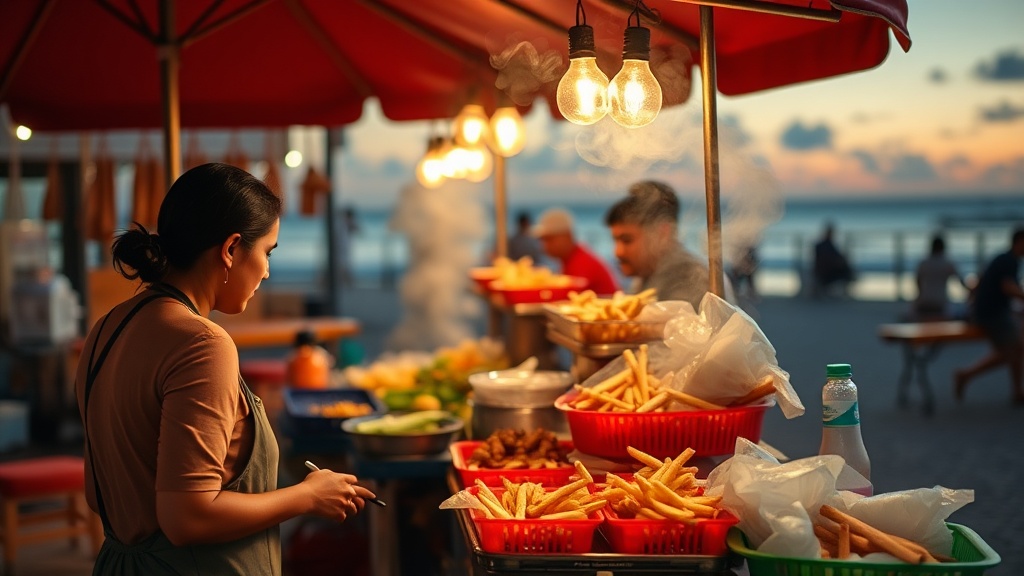
How to Find the Best Local Street Food Near the Beach

Avoid the Tourist Trap Menu
Many travelers believe that the most expensive seaside restaurants offer the highest quality food, but the reality is often the opposite. In many coastal destinations, high-end beachfront dining is designed for international palates, often resulting in bland, overpriced meals. The most authentic, flavorful, and budget-friendly experiences are found at local street food stalls located just a few blocks away from the main sand and surf. This guide provides a practical framework for identifying safe, delicious, and culturally authentic street food near any tropical coastline.
Finding high-quality street food requires a shift in perspective. Instead of looking for English-language menus or air-conditioned seating, you must look for indicators of local popularity and high turnover. High turnover is your best defense against foodborne illness, as it ensures ingredients are fresh and not sitting in the tropical heat for extended periods.
Look for the Crowd Density
The most reliable indicator of quality is a queue of locals. While it may be tempting to avoid a stall with a long line of people, that line is actually a sign of a high-quality operation. In places like Phuket, Thailand, or Bali, Indonesia, the best satay or nasi goreng stalls are often crowded with locals after work hours. A high volume of customers means the food is being prepared and consumed quickly, which is essential in humid, coastal environments.
Pay attention to the demographic of the crowd. If you see families, students, and local workers, you have found a legitimate local spot. If the crowd consists entirely of tourists with cameras and backpacks, you are likely looking at a "tourist trap" that has optimized its prices for travelers rather than its recipes for locals. A quick tip for those exploring remote areas: if you are out on a boat or near a secluded bay, look for the stalls where the local fishing community eats. These are often the most honest representations of the local cuisine.
Assess the Hygiene Standards
Safety is a primary concern when eating near the ocean, where humidity and heat can accelerate bacterial growth. You do not need to see a sterile kitchen to know a stall is safe; instead, look for specific visual cues of good food handling. A professional street food vendor will prioritize a clean workspace, even in a minimalist setting.
- Check the Oil: If you are eating fried foods like tempura in Japan or pakoras in India, look at the color of the cooking oil. It should be clear or a light golden color. If the oil is dark, thick, or smoking heavily, the vendor is reusing it too many times, which affects both taste and health.
- Observe the Cooking Process: Seek out vendors who cook your food to order over high heat. High heat (flame or boiling oil) is a natural way to kill bacteria. Avoid stalls that serve large batches of pre-cooked food that have been sitting in lukewarm trays.
- Hand Hygiene: Look for vendors who use utensils or gloves to handle ready-to-eat items like fruit or bread. While a full sink isn't always present, a vendor who is organized and keeps their hands away from their face and hair is a good sign.
- Ingredient Storage: In tropical climates, perishables must be kept cool. If you see raw seafood or meat sitting out on a table in the direct sun, move on to the next stall.
While you are navigating coastal environments, remember that staying hydrated and keeping your gear clean is part of a successful outing. If you are eating outdoors, you might want to keep your electronics in a dry bag to protect them from both sand and spilled sauces.
Follow the Single-Menu Rule
One of the most effective ways to ensure quality is to find a vendor that specializes in only one or two items. A vendor in a coastal village in Vietnam might only sell Banh Mi or Pho, while a vendor in Mexico might focus exclusively on fish tacos. This specialization allows the vendor to master their craft and ensures that they are sourcing the freshest ingredients for that specific dish every single day.
A massive menu with dozens of options is often a red flag. It suggests that the vendor is trying to cater to every possible preference, which often means they are not specializing in anything. When a vendor focuses on a single dish, they have higher inventory turnover, meaning their ingredients—especially seafood in beach towns—are much more likely to be caught that morning.
Identify Freshness Through Scent and Sight
Your senses are your best tools when evaluating street food. In a beach environment, the smell of the ocean is constant, so you must distinguish between the salt air and the aroma of the food. A good street food stall should smell appetizing—think of the scent of toasted spices, fresh lime, or grilled proteins. If you detect a sour or "off" odor near the raw ingredients, do not eat there.
When it comes to seafood, which is a staple of beachside street food, look for specific signs of freshness:
- The Eyes: If the fish is displayed whole, the eyes should be clear and bulging, not sunken or cloudy.
- The Gills: For fish, the gills should be bright red or pink, not brown or grey.
- The Texture: The flesh of the seafood should look firm and bouncy. If it looks mushy or translucent in a way that suggests it has been sitting in heat, avoid it.
- The Shells: If you are eating shellfish like prawns or clams, ensure the shells are intact and, if they are being steamed, that they open up fully during the cooking process.
Navigate the Payment and Tipping Culture
Understanding how to pay is just as important as knowing what to order. In many tropical destinations, street food is a cash-heavy business. Always carry small denominations of the local currency. If you try to pay a large bill for a small snack, you may cause a delay or create an awkward situation for the vendor. Additionally, keep a small amount of change handy for quick transactions in busy markets.
Tipping etiquette varies wildly. In many Southeast Asian beach destinations, a small tip is not expected at a street stall, and rounding up the change is a kind gesture. However, in parts of the Caribbean or Central America, a small tip for excellent service is often appreciated. When in doubt, observe what the locals do. If you see people leaving small amounts of change, it is safe to follow suit.
The Best Times to Eat
Timing your meals can significantly impact the quality of your food. Most street food markets have a peak "golden hour." For example, in many Mediterranean beach towns, the street food stalls really come alive around 7:00 PM or 8:00 PM. In Southeast Asia, the evening markets are often the most vibrant and offer the freshest cooked-to-order meals.
Avoid eating at a street stall during the "off-peak" hours, such as mid-afternoon when the heat is at its highest and foot traffic is lowest. During these times, the food may have been sitting out longer, and the vendor may be running low on fresh stock. Aim to arrive when the stalls are just starting to set up or when the initial rush of locals has begun. This ensures you are eating food that is being prepared in real-time.
Practical Checklist for Beachside Food Hunting
Before you take your first bite, run through this quick mental checklist to ensure you are making a smart choice:
- Is there a high turnover of customers (especially locals)?
- Is the vendor cooking the food over high heat right in front of me?
- Is the menu limited to a few specialized items?
- Does the seafood look bright, firm, and fresh?
- Is the workspace organized and free of clutter?
By following these steps, you will move beyond the sanitized, expensive menus of the tourist zones and into the heart of the local culture. The best way to experience a new destination is through its flavors, and the most authentic flavors are almost always found on a street corner near the beach.
Steps
- 1
Look for the Crowds
- 2
Check the Menu Simplicity
- 3
Watch the Food Being Made
- 4
Follow the Locals