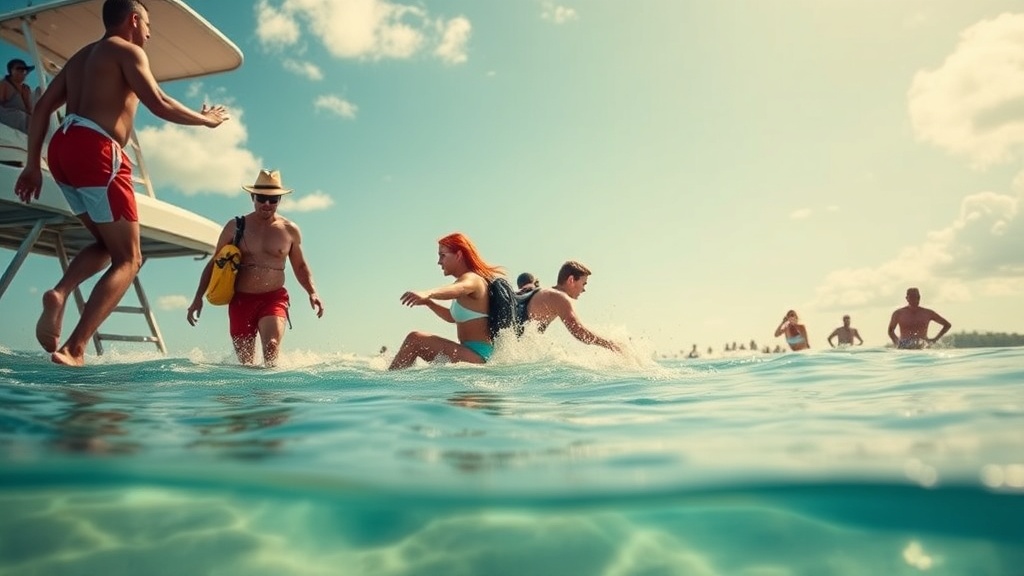
What Lifeguards Wish Every Beachgoer Knew Before Diving In

Every year, thousands of travelers flock to coastal destinations only to face preventable emergencies—rip current rescues, severe sunburns, jellyfish stings, and heat exhaustion that could have been avoided with the right knowledge. This guide covers the seven most important beach safety skills that lifeguards, marine biologists, and experienced coastal travelers want you to understand before your toes touch the sand. You will learn how to spot hidden hazards, read beach warning systems, protect yourself from marine life, and make smart decisions that keep your vacation on track. Whether you are planning a family trip to Florida, a solo adventure in Thailand, or a romantic getaway to the Greek Islands, these practical tips will help you enjoy the water with confidence.
What Exactly Is a Rip Current and Why Is It So Dangerous?
Rip currents are narrow, powerful channels of water flowing away from shore—and they account for over 80% of beach rescues performed by lifeguards. These invisible rivers form when waves break strongly in some locations and weakly in others, creating a fast-moving current that can pull even strong swimmers away from the beach at speeds up to eight feet per second.
Here is what most travelers get wrong: rip currents do not pull you under—they pull you out. The instinct to fight against the current and swim directly back to shore exhausts swimmers quickly, leading to panic and drowning. The correct response? Swim parallel to the beach until you escape the current's narrow channel, then angle back toward shore at a comfortable pace. If you cannot break free, float on your back, signal for help, and let the current carry you—it will eventually dissipate beyond the breaking waves.
Spotting rip currents before entering the water gives you a massive advantage. Look for channels of choppier, darker water extending seaward through the surf zone, areas where waves are not breaking, or lines of foam, seaweed, or debris moving steadily offshore. If you see these signs, choose a different entry point—or better yet, swim near a lifeguard tower. For more detailed visual guides, the National Weather Service provides excellent resources on rip current identification.
What Do Those Colored Flags Actually Mean?
Beach warning flags are not decorative—they are a standardized communication system designed to keep you alive. Yet surveys show that over 60% of beachgoers cannot correctly identify what each color signifies. Ignoring these flags (or misunderstanding them) leads to countless preventable emergencies every summer.
Double red flags mean the beach is closed to the public—swimming is prohibited and dangerous. Single red indicates high hazard with strong currents or rough surf; only experienced swimmers should enter, and then with extreme caution. Yellow signals medium hazard with moderate surf or currents—weak swimmers and children should stay in shallow water. Green means calm conditions with low hazard, though conditions can change rapidly. Purple or blue flags warn of dangerous marine life—jellyfish, stingrays, or sharks spotted in the area.
Flag systems vary slightly by country, so always check the local legend posted near lifeguard stations. In the United States, the United States Lifesaving Association promotes a consistent color system, but international travelers should verify local meanings. When flags are not flying, do not assume safety—ask lifeguards directly about current conditions and any concerns specific to that day's surf.
How Can You Protect Yourself From the Sun (Beyond Just Sunscreen)?
Sunburn ruins vacations faster than almost anything else—and the damage happens more quickly than most people realize. Water reflects up to 80% of UV rays, meaning you get hit from above and below simultaneously. At tropical latitudes, unprotected skin can burn in as little as 15 minutes during peak hours.
Broad-spectrum sunscreen (SPF 30 or higher) is your baseline, not your complete defense. Apply it 30 minutes before sun exposure, use about one ounce (a shot glass full) for full body coverage, and reapply every two hours—or immediately after swimming or sweating. Most people use only 25-50% of the recommended amount, which dramatically reduces protection.
But here is the strategy smart beachgoers employ: create physical barriers. A wide-brimmed hat protects ears, neck, and scalp—areas where sunscreen washes away quickly. UV-protective rash guards block 98% of harmful rays while reducing the amount of skin needing chemical protection. Beach umbrellas provide shade but do not block reflected radiation from sand and water—combine them with other measures. Seek shade between 10 AM and 4 PM when UV intensity peaks. The Skin Cancer Foundation offers detailed guidance on sun-safe practices for outdoor activities.
Which Marine Life Should You Actually Worry About?
Shark attacks capture headlines, but statistically they are extraordinarily rare—your odds of dying from a shark encounter are roughly 1 in 4 million. The creatures that actually send travelers to beachside clinics are far less cinematic: jellyfish, stingrays, sea urchins, and microscopic bacteria.
Box jellyfish and Portuguese man-of-war deliver painful stings that can cause respiratory distress in sensitive individuals. If stung, rinse with vinegar (not fresh water, which triggers remaining stingers), remove tentacles with tweezers, and immerse the area in hot water. Stingrays hide in sandy shallows and strike when stepped on—the classic "stingray shuffle" (sliding your feet through sand while entering the water) alerts them to move away.
Sea urchins cling to rocky areas and their spines break off easily in flesh. Remove visible spines with tweezers, then soak in hot water to dissolve embedded fragments. Vibrio bacteria thrive in warm coastal waters and enter through cuts or scrapes, potentially causing serious infections. If you have open wounds, stay out of the ocean or cover them completely with waterproof bandages. Check local marine life reports before swimming—many beaches post recent sightings of hazardous species.
When Is the Most Dangerous Time to Swim?
Timing your swim correctly can be the difference between a refreshing dip and a life-threatening emergency. Early morning and late afternoon offer the safest conditions—lifeguards are typically on duty, winds are calmer, and UV exposure is reduced. But other factors matter just as much.
Incoming tides generally create calmer swimming conditions, while outgoing tides strengthen rip currents and expose more rocky, hazardous areas. Check local tide tables before planning your beach day. After storms, water quality drops significantly—runoff carries bacteria, debris, and pollutants into the ocean. Wait 72 hours after heavy rainfall before swimming, especially near river mouths or urban areas.
Alcohol and swimming do not mix—over 70% of water recreation deaths involve alcohol consumption. Impaired judgment, reduced coordination, and increased risk-taking create a dangerous combination in aquatic environments. Save the cocktails for after you are back on dry sand. Similarly, swimming alone—especially at beaches without lifeguards—eliminates your safety net if something goes wrong.
How Do You Keep Your Valuables Safe on the Shore?
Nothing dampens a beach day like returning from the water to find your phone, wallet, or room key missing. Beach theft is opportunistic—thieves watch for unattended bags, distracted tourists, and easy grabs. Protecting your belongings requires strategy, not just luck.
Travel light. Bring only what you absolutely need—a single credit card, some cash, your phone, and a copy of your ID (leave the original locked up). Waterproof phone cases that float provide protection from both thieves and accidental submersion. Consider a portable safe—small, cable-secured containers that attach to your beach chair or umbrella. Some look like sunscreen bottles or other everyday items, hiding valuables in plain sight.
Position your setup strategically. Choose spots near lifeguard towers (thieves avoid areas with authority figures) or within sight lines of water sports rental stations where staff maintain awareness. Take turns swimming if you are with a group—someone should always stay with your belongings. Never bury items in the sand near your towel (it is the oldest trick in the book and the first place thieves check). For extended stays at one beach, consider renting a locker if available, or ask your hotel about secure storage options.
What Should You Do If You See Someone Struggling?
Bystander rescues often end in double drownings—the would-be rescuer exhausts themselves trying to help and becomes the second victim. Understanding proper response protocols keeps everyone safer and dramatically improves outcomes.
First, alert a lifeguard immediately—they have training, equipment, and flotation devices. If no lifeguard is present, call emergency services before taking any action. Look for flotation devices—rescue cans, boogie boards, or even empty coolers—that you can extend to the struggling swimmer while staying on shore or in shallow water. Reach, throw, row, go—this is the rescue hierarchy. Reach with a long object, throw a flotation device, row out in a boat if available, and only go yourself as an absolute last resort.
If you must enter the water, approach the struggling person from behind—panicked swimmers often grab rescuers and pull them under. Talk calmly, reassure them, and tow them to safety using a flotation device as a buffer. Once on shore, check for breathing and begin CPR if necessary until professional help arrives. Taking a basic water rescue course before your vacation (offered by the American Red Cross and similar organizations worldwide) prepares you for these scenarios far better than improvisation.
The ocean is beautiful, powerful, and indifferent to human plans. Respecting its force while understanding how to work with—not against—natural conditions transforms your beach experience from risky to remarkable. Armed with these seven safety skills, you can focus on what matters: the warmth of the sun, the rhythm of the waves, and the joy of a perfect coastal escape.