How to Protect Your Skin and Hair from Intense Tropical Sun
A traveler sits on a sun lounger in Phuket, feeling the warmth of the midday sun, only to realize two hours later that their shoulders are pulsing with a deep, painful burn. Despite applying a layer of lotion earlier that morning, the combination of high humidity, salt spray, and intense UV indices has rendered their protection ineffective. This scenario is common in tropical destinations where the sun's intensity is significantly higher than in temperate climates. This guide provides practical, science-backed strategies to protect your skin and hair from UV damage, ensuring your tropical vacation remains enjoyable rather than painful.
Understanding the Tropical UV Index
To protect yourself effectively, you must understand the tool used to measure solar radiation: the UV Index. In tropical regions like the Maldives, the Caribbean, or Fiji, the UV index frequently reaches levels of 11+ (Extreme). At these levels, unprotected skin can burn in as little as 15 minutes. Most travelers make the mistake of only checking the temperature, but the temperature is not a direct indicator of UV intensity. A cloudy day in the tropics can still feature high UV levels because UV rays penetrate cloud cover more easily than visible light.
Check a reliable weather app daily to monitor the peak UV hours. Generally, this is between 10:00 AM and 4:00 PM. If you are navigating hidden lagoons or spending extended time on the water, remember that sunlight reflects off the water's surface, effectively doubling your exposure. This reflection increases the radiation hitting your skin and eyes, making even shaded areas less safe than they appear.
Advanced Sunscreen Strategies
Standard drugstore sunscreen often fails in tropical environments because it is not formulated to withstand heavy perspiration and constant saltwater immersion. For high-intensity sun, you need a specific type of protection.
Choose Broad-Spectrum and Water-Resistant Formulas
Ensure every bottle you pack is labeled as "Broad-Spectrum." This means it protects against both UVA rays (which cause premature aging and wrinkles) and UVB rays (which cause sunburns). In a tropical climate, look for "Water-Resistant" labels that specify a duration of 80 minutes. Brands like La Roche-Posay and Shiseido offer high-performance versions that stay intact even during heavy swimming or hiking.
The Application Technique
Most people apply far too little sunscreen. To get the SPF rating listed on the bottle, you must use a significant amount. For the body, the rule of thumb is a full shot glass worth of lotion per application. For the face, use a nickel-sized amount. Do not forget "hidden" areas: the tops of your ears, the part in your hair, the tops of your feet, and your lips. Use a dedicated SPF lip balm, such as Sun Bum, to prevent painful peeling.
Reapplication Rules
Sunscreen is not a "one and done" solution. You must reapply every two hours, or immediately after towel-drying or swimming. Even if a product claims to be "long-lasting," the friction of a towel or the salt in the ocean breaks down the chemical or mineral barrier. If you are using a mineral sunscreen (Zinc Oxide or Titanium Dioxide), it may feel thicker, but it is often more stable in high heat.
Physical Barriers and Protective Apparel
While topical creams are essential, physical barriers provide a more reliable and consistent level of protection. Relying solely on lotions is a high-risk strategy in equatorial zones.
UPF-Rated Clothing
Instead of standard cotton T-shirts, which have very little natural UV protection once they get wet, invest in clothing with a UPF (Ultraviolet Protection Factor) rating. A UPF 50+ shirt allows only 1/50th of the sun's UV radiation to reach your skin. This is particularly useful for water sports or long boat rides where skin exposure is constant. Look for lightweight, moisture-wicking fabrics from brands like Patagonia or Columbia to stay cool while staying covered.
Headwear and Eyewear
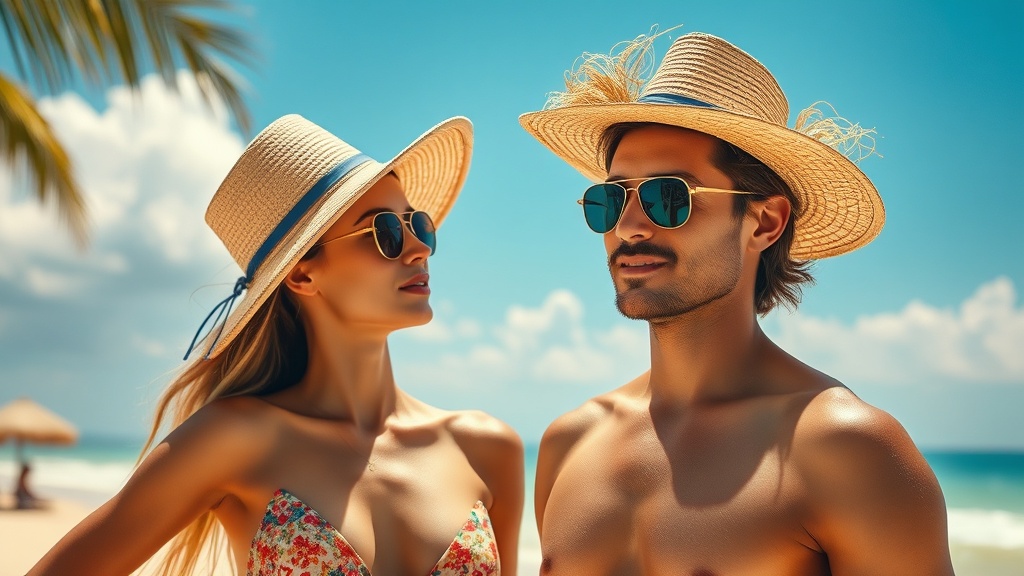
A hat is non-negotiable. However, a baseball cap is insufficient because it leaves your ears and the back of your neck exposed. Opt for a wide-brimmed hat (at least 3 inches) that provides 360-degree shade. Additionally, ensure your sunglasses are labeled as UV400. This ensures they block 100% of both UVA and UVB rays. Protecting your eyes is vital to prevent photokeratitis, a painful inflammation of the cornea caused by excessive sunlight.
Protecting Your Hair from Sun and Salt Damage
The tropical sun does more than just burn skin; the UV rays break down the protein structure of your hair (keratin) and strip away natural oils. When combined with saltwater and chlorine, this can lead to brittle, straw-like texture and color fading.
Pre-Saturation and Barrier Oils
Before entering the ocean or a pool, soak your hair with fresh water. Hair is like a sponge; if it is already saturated with fresh water, it will absorb less saltwater and chlorine. After saturating, apply a protective hair oil or a leave-in conditioner. Products containing coconut oil or jojoba oil create a hydrophobic barrier that prevents salt and chemicals from penetrating the hair shaft. Moroccanoil or Oribe offer high-quality treatments that work well in humid environments.
UV Protection for Hair
Just as you use SPF for your skin, you can use UV protection for your hair. Look for hair mists specifically designed to block UV rays, such as Sun Bum's Sea Kelp Hair Veil. This helps prevent the sun from "bleaching" your hair and causing oxidative stress. If you have color-treated hair, this step is critical to prevent your salon color from turning brassy or fading prematurely.
Post-Beach Recovery
After a day at the beach, immediately rinse your hair with fresh water to remove salt and sand. Use a clarifying shampoo once or twice a week to remove any buildup from sunscreen and sea minerals. Follow up with a deep conditioning mask to restore moisture. A highly effective method is to use a protein-rich mask, like Briogeo Don't Deserve Me, to help repair any structural damage caused by the intense tropical heat.
Practical Checklist for Tropical Sun Safety
To ensure you aren't caught unprepared, keep these items in your beach bag at all times:
- Broad-Spectrum SPF 50+ Sunscreen: Both cream and spray versions.
- SPF Lip Balm: To prevent sun-induced chapping.
- Wide-Brimmed Hat: For maximum facial and neck shade.
- UV400 Sunglasses: To protect ocular health.
- UPF Clothing: For extended outdoor activities.
- Leave-in Conditioner/Hair Oil: To create a moisture barrier.
- Hydration: A reusable insulated water bottle to prevent heat exhaustion.
By treating sun protection as a multi-layered system—combining topical SPF, physical barriers, and hair-specific care—you can enjoy the beauty of tropical destinations without the long-term damage. Whether you are exploring the islands or relaxing on a resort beach, these professional-grade habits will keep your skin glowing and your hair healthy.
Steps
- 1
Apply broad-spectrum sunscreen every two hours
- 2
Wear a wide-brimmed hat and UV-rated clothing
- 3
Use a hair oil or leave-in conditioner to prevent dryness
- 4
Seek shade during peak sunlight hours