The Women the Ocean Made: Stories of Salt, Resilience, and Who We Become
My mom doesn't swim.
This is the thing that surprises people when I tell them she raised three kids within half a mile of the Atlantic Ocean. Denise Nakamura — born in Savannah, Georgia, married to a Navy man who got stationed in Jacksonville — spent 22 years living next to the water and never once put her full body in it.
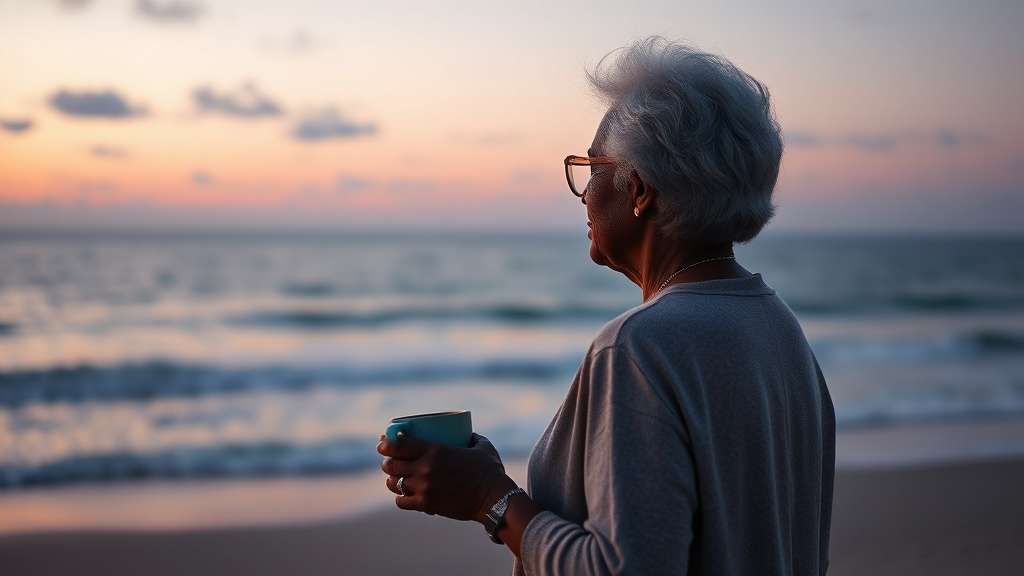
But she stood at the edge of it constantly. Almost every evening, if the weather allowed. She'd walk down to the shore after dinner with a cup of tea and just... stand there. Watching it.
I asked her about it once when I was maybe eleven. "Why do you always go if you don't go in?"
She thought about it for a second. "Because it's the only thing that's bigger than my problems," she said. Then she sipped her tea and looked back at the water like that was a completely normal thing to tell a kid.
I've been thinking about that answer for twenty years.
With International Women's Day on Sunday, I've been in my feelings a little. Not in a bad way — in the way that happens when you've spent your whole life around the ocean and you start tracing back all the women who shaped you because of it, or in spite of it, or alongside it.
This isn't a ritual list. This is something different.
This is about the women the ocean made.
My Mom and the Edge of the Atlantic
My dad (Hiroshi, retired Navy, currently menacing the Jacksonville golf scene) was the one who brought us to Florida. But the ocean became my mom's thing in a way I didn't fully understand until I was an adult.
She didn't grow up with the ocean as a daily thing. She grew up in Savannah — technically near the Georgia coast, but the beach wasn't part of everyday life there the way it is for people who actually live on the water. When she married my dad and got assigned to Mayport, the Atlantic was new to her. Enormous. Unpredictable in a way she found unsettling.
She told me she was scared of it for the first two years.
But she kept walking to the edge anyway. Something about the size of it — the way it didn't care about PTA meetings or my brother Marcus's behavioral referrals or whether the dentist had a cancellation — made it necessary.
"The ocean doesn't ask you how you're doing," she told me once. "It just is. And sometimes that's what you need."
She still lives ten minutes from that same stretch of beach. Still walks to the edge with her tea. Now sometimes I go with her when I'm visiting, and we just stand there together, and I understand exactly what she meant.
The Women I Met in Tulum
I worked two years as a guest experience coordinator at a boutique resort in Tulum. It changed how I think about beach destinations and tourism, and honestly — about women.
Because here's what doesn't make it into the Instagram grid from Tulum: the local women who actually keep those cenotes clean, who run the small food stands outside the resort zones, who have been working those waters since before any of us discovered the destination.
I became friends with a woman named Carmen who ran a snorkeling tour operation out of the south end of the beach. She'd grown up in a fishing family, learned the reef by watching her grandmother work it, and built a six-person business that operated entirely on word of mouth. She spoke three languages, could identify every species of coral in the local reef system, and had opinions about marine conservation that put most resort guests to shame.
Every week, guests would walk past her booth and book with the resort-affiliated tour instead — because the resort booth had better signage and an app integration.
Carmen didn't need my help, honestly. She was fine. But watching her work — explaining the reef to a family from Ohio with the kind of patience and precision that only comes from loving something your whole life — that stuck with me.
The ocean doesn't belong to the resort. It belongs to the people who grew up next to it. And most of the time, those people are women like Carmen, building knowledge across generations while the tourism industry sells them back their own coastline.
Across 38 Beaches in 12 Countries
I've been keeping an informal mental catalog. The women I remember from every beach I've visited — not the ones who look good in the brochure, but the ones who actually know the place.
The dive instructor in Cozumel who knew the currents by name. Who could predict, almost to the minute, when the visibility would drop based on the angle of the light. Who had been diving that reef since she was sixteen, and cried once, in front of our whole group, when she found a section of coral bleaching that hadn't been there six months before.
The older woman in Ko Lanta, Thailand who ran a small restaurant right on the water — no menu, she just cooked what came in from the boats that morning. She'd been there for forty years. Her daughter worked beside her. Her granddaughter was learning.
The park ranger at Cumberland Island National Seashore in Georgia — a Black woman in her fifties who gave a thirty-minute talk about the wild horses on the island that was honestly more compelling than any guided tour I've ever paid for. She'd been stationed there for eighteen years. Knew every horse by name.
My friend Yolanda in St. Augustine who surfs every morning at 6 AM, 365 days a year, has done so for eleven years, and will not talk to you about it until after she's had coffee because it's hers and she doesn't need to explain it.
What I notice, across all of them: the relationship is old. It isn't trend-driven. It isn't something they found on a wellness app or a purchased retreat. (If you're curious about actual ocean wellness practices that work, that's different — but these women didn't need an app to find their ocean.)
The ocean shaped them the way it shapes coastlines — slowly, through repeated contact, taking something away and leaving something different in its place.
What I Think My Mom Actually Meant
I'm 31 now, so I've been carrying that thing she said for about two decades: "It's the only thing that's bigger than my problems."
What I think she meant — what I've come to understand from my own version of standing at the edge — is that there's something specifically useful about being confronted with something that has no opinion about you.
The ocean is genuinely indifferent. Not in a nihilistic way. In a clarifying way.
When I was going through the end of the Tulum job (the resort politics, the burnout, the decision to leave and come home), I spent a lot of evenings at the water. Not doing anything. Not journaling. Just standing there while something massive moved in front of me without any interest in my situation.
It helped.
I don't fully know how to explain that. It's not a hack. It's not a practice you can schedule.
It's more like — the ocean reminds you that you're both smaller and more resilient than you think. Both true at the same time.
This Sunday, If You Can Get to the Water
I know International Women's Day can feel performative — the pink-washed campaigns, the "empower her" product drops, the brands using it as a marketing event for 24 hours before moving on.
If any of it feels hollow to you this year, try this instead:
Go to the water. Bring someone who matters to you if you can — a friend, a sister, a mom, a daughter. Or go alone.
Don't bring an agenda. You don't have to swim. You don't have to do anything.
Just stand at the edge of something bigger than your problems for a few minutes.
And if you have stories — women in your life who were shaped by the ocean, or by the mountains, or by any piece of wild nature that didn't ask them to perform or optimize — I'd genuinely love to hear them. Drop them in the comments. I'll read every one.
My mom still walks to the Atlantic with her tea.
I think she's been onto something all along.
Happy International Women's Day to all of you — especially the ones who know a good piece of coastline and keep that knowledge close.
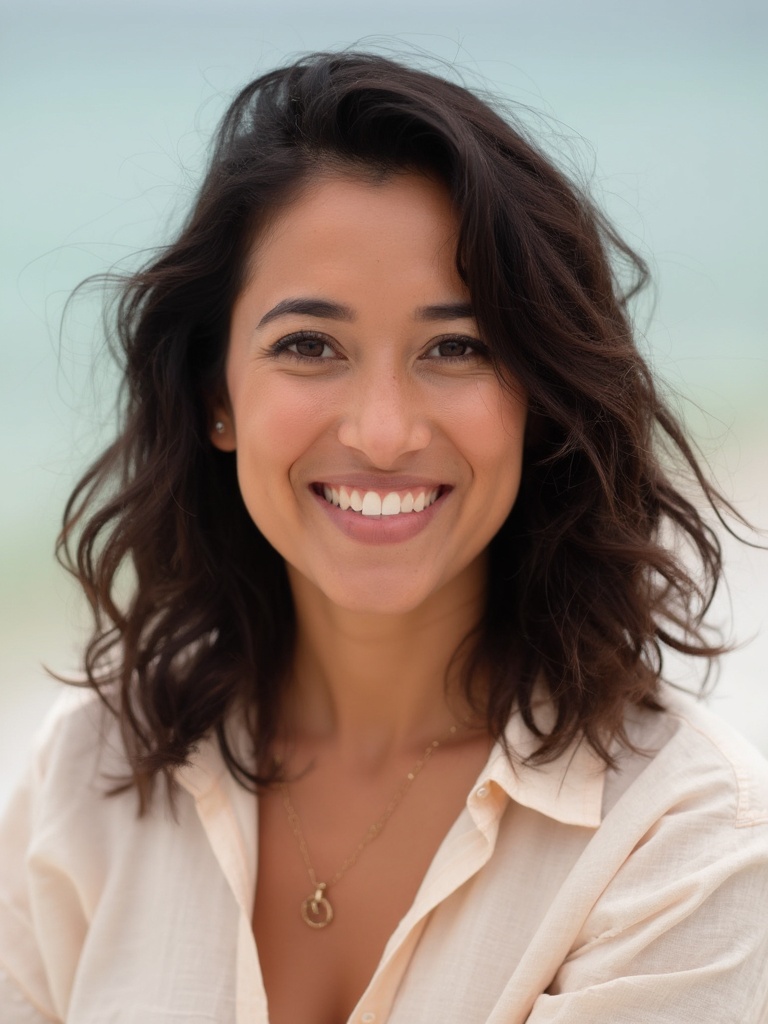
— Kayla
(Yes, my dog's name is Sandy. No, I'm still not sorry.)